Clangers, Bridies and Pork Pies: Britain's Forgotten Hand Pies Worth Travelling For
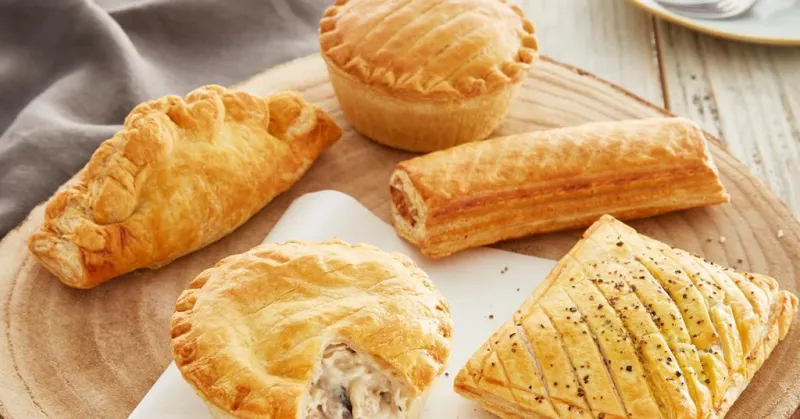
Photo: assorted traditional British pies and pasties on wooden board, via d3rctclhuobtt7.cloudfront.net
Ask anyone to name a British hand pie and you'll hear the same answer: the Cornish pasty. And fair play — it's protected, it's proud, and it's earned its reputation. But travel a few counties in any direction and you'll find a whole family of crimped, folded and jolly-filling cousins, each with a story as hearty as the pastry itself. We packed the car and went looking.
The Bedfordshire Clanger: One Pastry, Two Courses
Head up the M1 to Bedfordshire and you'll meet the clanger — quite possibly the most delightfully eccentric bake in Britain. Shaped like a pasty's longer, slimmer cousin, the traditional clanger is split in two: one end filled with meat and potatoes, the other with jam or fruit. A main course and pudding in one hand, no cutlery required.
The name is wonderfully murky. Some say it comes from 'clangy', local slang for hungry — as in, 'I'm fair clanged out.' Either way, it was the packed lunch of agricultural workers, made by wives who couldn't be doing with two containers.
Finding one today: They're rare, but bakeries around Bedford and the surrounding villages occasionally revive them, and food festivals in the county are your best bet.
The wholesome twist: Use the same 50/50 wholemeal pastry trick we swear by, fill the savoury end with lentils and root veg, and go for no-added-sugar berry compote at the sweet end. A clanger that's genuinely a balanced meal — history would be proud.
The Forfar Bridie: Scotland's Beefy Answer
Cross the border to Forfar in Angus, and you'll find the bridie: a flat, semicircular pasty of seasoned beef mince (traditionally with a bit of beef suet), sealed with a simple crimp. Legend has it that the crimp pattern once told you whether your bridie had onions or not — a code for the fussy eaters of Angus.
Named, some say, after Margaret Bridie of Glamis, who sold them at Forfar market in the nineteenth century; named, others say, after the bride at whose wedding they were first served. Take your pick — both stories go down nicely with a bridie and a cup of tea.
Finding one today: Butchers in Forfar still make them to this day, and they're well worth seeking out if you're ever passing through Angus.
The wholesome twist: Lean minced beef, grated carrot, a spoonful of pearl barley for texture and fibre, and an olive oil-enriched wholemeal pastry. Bake rather than fry, obviously.
The Yorkshire Pork Pie: A Cold-Snack Institution
The pork pie — Yorkshire claims it, Melton Mowbray in Leicestershire contests it — is the aristocrat of the hand pie family. Hot-water crust pastry, hand-raised, packed with chopped pork and set with jelly, it's a pie you eat cold, ideally on a hillside with a flask of tea.
Finding one today: Any decent butcher's counter in Yorkshire will have a stack, but the small independent producers around the Dales are where the magic is.
The wholesome twist: A leaner pork-and-apple filling with plenty of sage, a wholemeal hot-water crust, and a side of proper piccalilli. It's still a treat food — but a treat with a bit of goodness in it.
The Lancashire Butter Pie: Comfort by Another Name
Don't let the name fool you — the butter pie (also called a Catholic pie, for its meat-free Friday credentials) contains no butter at all, just potatoes, onions and pastry. Simple, filling, and beloved across Lancashire for generations.
The wholesome twist: This one barely needs it. Wholemeal pastry, an extra onion, a sprinkle of thyme and a dash of veg stock in the filling, and it's about as wholesome as comfort food gets.
Why These Pies Matter
There's something quietly brilliant about a nation that spent centuries inventing portable lunches. Long before meal-prep containers and protein wraps, British workers were carrying balanced, self-contained meals in their pockets — pastry as packaging, filling as fuel.
Each of these pies tells you something about the place that made it: the crops that grew there, the work people did, the ingredients they had to hand. And each one is begging for a modern, wholesome revival.
So next time you're pasty-ed out, take a culinary detour. Roll out some wholemeal pastry, pick a county, and bake a bit of forgotten Britain. Your lunchbox — and your curiosity — will thank you.